We are used to keeping track of every employee: who they are, what privileges they have, which systems they can access, and which systems they use. But there is a growing workforce that mostly goes unnoticed: non-human identities (NHIs). Non-human identities (NHIs) are digital entities with privileges, access scopes, and defined roles that allow applications, services, and devices to authenticate and perform tasks without human intervention.
In cloud environments, NHIs typically take the form of cloud-native identity constructs.
These identities have granular permissions, but they are created without security oversight, monitored inconsistently, and rarely retired. This leads to identity sprawl, which is usually accompanied by secret sprawl. Let's look at how this happens and how to respond.
☑️ NHIs Remain a Blind Spot for Security Teams
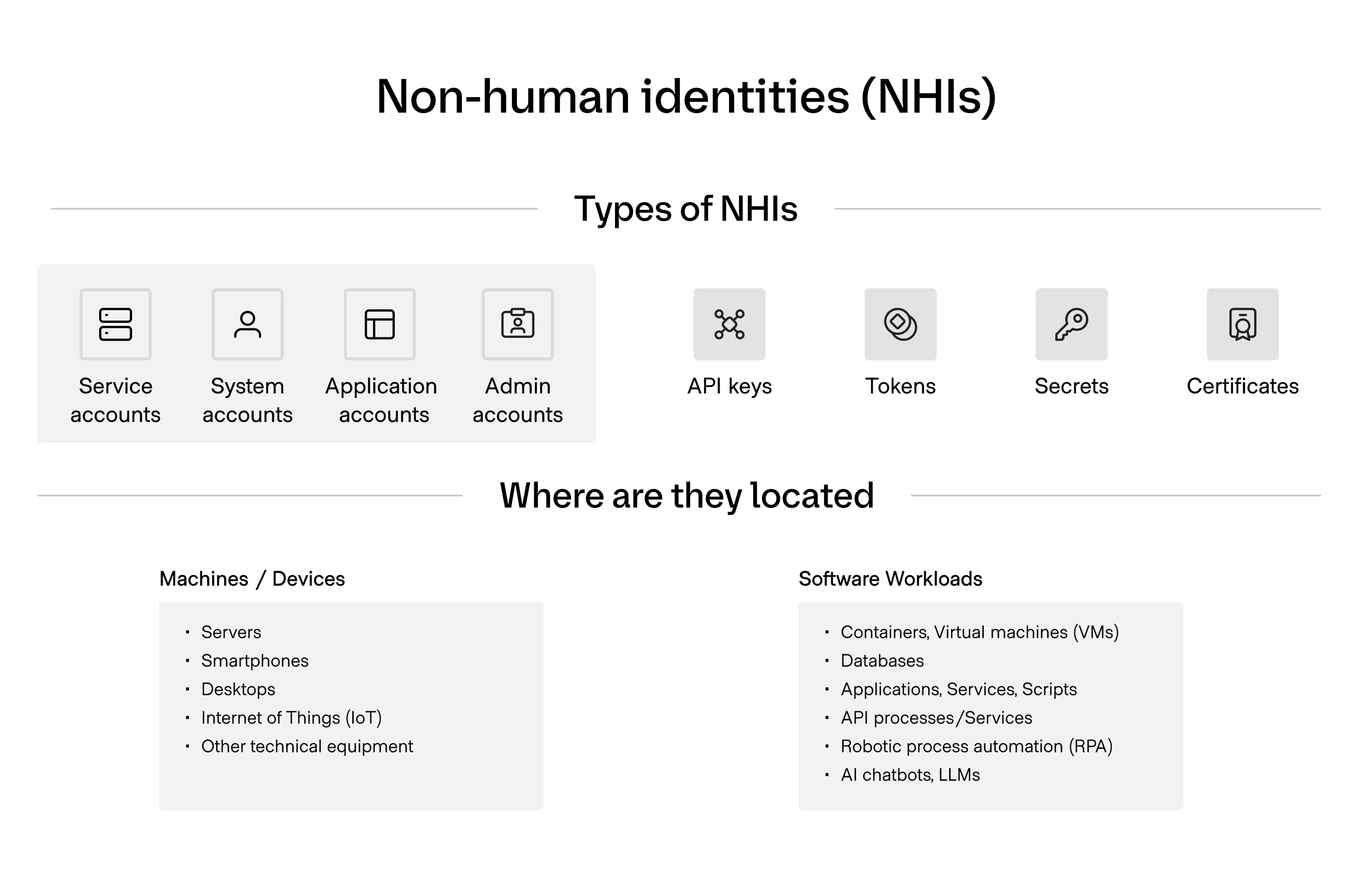
NHIs now outnumber human employees, creating visibility gaps and expanding an attack surface that traditional identity management approaches were not designed to address. According to the NHI Management Group, 80% of identity-related breaches involve compromised non-human identity credentials. These credentials are scattered across systems, created in isolated environments, and not subject to the same rigorous management standards as human accounts.
☑️ Why Machine Identities Fall into a Management Blind Spot
NHI sprawl occurs because there is a fundamental gap in how organizations approach machine identity management compared with their human identity management processes.
☑️ Preventing NHI Sprawl Starts with Visibility
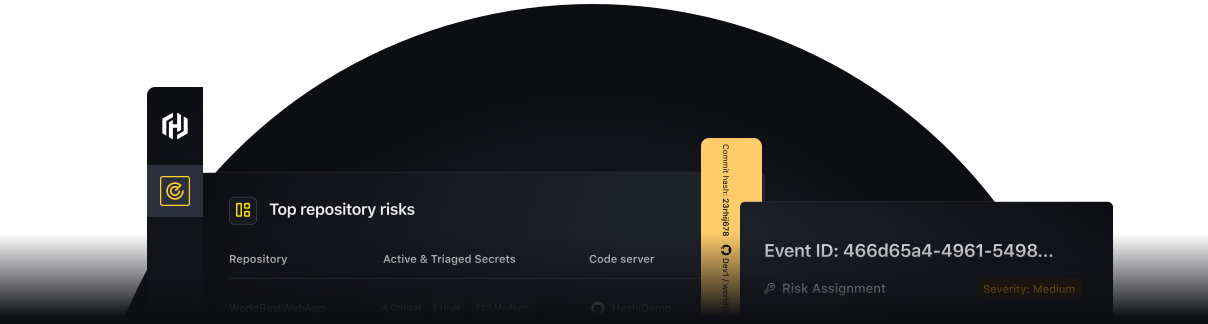
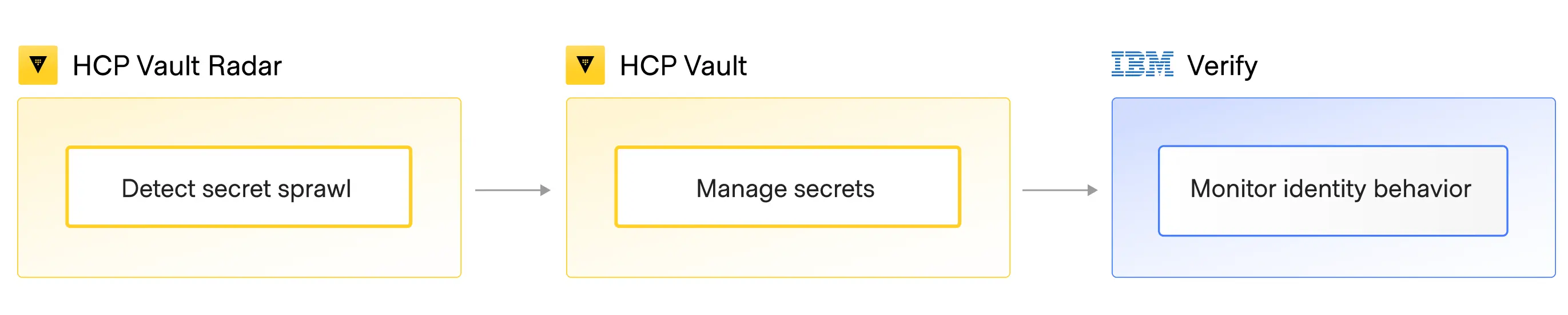
HCP Vault Radar helps teams keep NHI accounts secure when secrets (passwords or tokens) are accidentally exposed. It scans source code, developer environments, CI/CD pipelines, and collaboration tools to identify AWS keys, JWTs, SSH credentials, and API tokens. Pattern recognition and context-aware scanning reduce false positives and surface the most important findings. With real-time detection through pre-commit hooks and CI/CD integration, it prevents secrets from leaking into production when developers create new machine identities.
For broader visibility across the infrastructure, IBM Verify Identity Protection extends the scope of Radar, helping organizations understand how machine identities are used in real time and flag anomalous activity.
Manage the Entire Lifecycle of Non-Human Identities (NHIs)
Before protecting NHIs, it is important to manage how they are created and which resources they can access. Left unmanaged, NHI sprawl occurs as identities are created without a clear purpose, policy, or lifecycle ownership. HashiCorp Vault plays a central role in how identities are authenticated, authorized, and managed after they are provisioned. Vault enables organizations to apply access rules to existing NHIs, classify them using namespaces, and ensure that credentials are properly scoped. Instead of granting broad access, Vault enables least-privilege design through short-lived or dynamic secrets. This limits exposure and reduces the risk of overprivileged machine accounts.
Prioritize and Respond Quickly
When machine credentials are leaked, every second counts. Vault Radar provides real-time alerts and automated notifications as soon as an exposure is detected. This narrows the attack window and prevents the months- or years-long exposure that makes non-human identities so dangerous. Alerts are integrated directly into existing incident response workflows such as JIRA, PagerDuty, and Slack and delivered to the right teams. Each finding includes contextual insights such as author, source, type, and severity level, helping teams triage secrets and focus their response on the highest-risk items.
Effective Governance for Developers
Vault Radar goes beyond simple detection. It builds remediation into development workflows. Vault Radar delivers findings directly to code owners with context and guidance so that problems can be fixed at the source. Once secrets are remediated, they can be imported into Vault for proper lifecycle management. This means rotation, expiration, and compliance reports are managed centrally, and audit logs are recorded to meet requirements such as SOC 2 and ISO 27001. Vault ensures that secrets are actively managed over time.
☑️ A Paradigm Shift in NHI Security: From Reactive to Proactive
Vault Radar shifts NHI management from reactive to proactive. It discovers frequently overlooked secrets, assesses their risk, and converts them into managed assets. This means stronger security, fewer production issues, faster audits, and workflows that make secure practices the easiest path.
| Before Vault Radar | After Vault Radar |
❓Discovery No centralized visibility NHI secrets scattered across various tools | 🔍Discovery Continuous monitoring across developer tools Real-time detection of exposed NHI secrets |
🚨NHI creation NHIs created without review Real-time detection of exposed NHI secrets | 🛠️NHI creation NHIs created without review No guardrails or review process |
🔓Sprawl Management No ownership or expiration Secrets persist indefinitely | 🔓Sprawl Management Secrets imported into Vault for lifecycle management Fast response enabled through context-based alerting and routing |
Non-human identities are now an essential, not optional, target for security management. Because they are invisible, risks can spread even faster, and a single exposure can shake the security of the entire organization. HCP Vault Radar detects NHI secret exposure in real time across development and operations environments, and HashiCorp Vault systematizes security across the entire lifecycle, from creation to retirement. Using the two solutions together gives organizations both visibility and control, eliminating security blind spots and keeping infrastructure safe from invisible threats.
▶ HashiCorp Vault : Learn More
HashiCorp Vault is an identity-based secrets and encryption management system that securely manages sensitive information based on authentication and authorization. It allows sensitive information such as tokens, API keys, passwords, encryption keys, and certificates to be managed consistently through a unified interface, and strengthens security with access control and audit logging capabilities. Secrets tend to be managed in a scattered way across platforms, it is difficult to know who is accessing which information, and it is not easy to implement capabilities such as key rotation, secure storage, and detailed logging on your own. To solve these problems, Vault allows access to sensitive data only after verifying and authorizing clients such as users, applications, and systems.
Through its dedicated team, CloudNetworks provides implementation and technical support services for the HashiCorp product portfolio, including Vault and Terraform. For inquiries about HashiCorp, please contact CloudNetworks, an official partner.