

Today, platform teams are being asked to fix the cloud without breaking it. Although cloud adoption has become nearly universal, measurable success remains difficult to achieve. Organizations continue to struggle with operational complexity, cost control, and security risk. To overcome these challenges, it is essential to simplify cloud operations through standardized workflows and automation. At the same time, the rise of platform teams as a strategic function that unifies and scales these efforts across the organization is also critical.
Based on the HashiCorp white paper "Empowering platform teams - How to do cloud right with The Infrastructure Cloud," this blog introduces a best practices framework for platform teams built on two core principles: simplified workflows and a unified platform.
It explains how IBM's Infrastructure Cloud, delivered through the HashiCorp Cloud Platform (HCP), supports Infrastructure Lifecycle Management (ILM) and Security Lifecycle Management (SLM) to help organizations accelerate innovation, strengthen security, and optimize operations. Finally, it explores the ongoing challenges of adopting a centralized platform model and the confusion caused by a lack of clarity on how to effectively build, operate, and scale platform teams.
☑️A New Cloud Operating Model for Organizations
In the early days of cloud adoption, speed was everything. Teams raced to deploy applications, often bypassing structure in order to experiment. The result was a fragmented tooling landscape, inconsistent processes, and mounting technical debt. Security misconfigurations became common. Costs skyrocketed. And platform teams, if they existed, had to clean up the mess.
One enterprise we spoke with described its environment as "a cloud of clouds." Each team had its own tools, its own way of provisioning infrastructure, and its own interpretation of security policies. Developers were agile, but operations were overwhelmed. Tickets piled up. Visibility was low. ROI was hard to achieve.
Fast-forward to today, and things have started to change. Platform teams are emerging as the connective tissue across cloud operations. By standardizing workflows and consolidating tools, they enable self-service without sacrificing control. They are reducing toil, improving security posture, and aligning infrastructure with business outcomes.
However, a gap between adoption and value still remains. According to PwC's 2024 Cloud and AI Business Survey:
To close this gap, organizations need a new operating model built on standardization, automation, and lifecycle management. Platform teams are at the heart of this transformation, but only if they are empowered with the right tools, clear ownership, and a unified approach to managing infrastructure and security at scale.
☑️Realizing ROI Through Platform Engineering: A Persona Perspective
Let's meet Jane, a principal platform engineer at a global enterprise. When she joined, every team had its own way of doing things. Different tools, different pipelines, different definitions of "secure." Developers wanted speed. Security wanted control. And she was stuck in the middle, trying to make it all work.
Platform engineering is not just a trend. It is a product-driven response to the chaos left behind by early cloud adoption. As Jane and others on her team can attest, they no longer just build tools. They build products that developers rely on every day. With developers demanding faster, self-service access to infrastructure and security teams seeking consistency and control, platform engineers like Jane are now the connective tissue. They must deliver sustainable speed, governance, and cost control across sprawling hybrid and multi-cloud environments. This represents a major evolution: from ad hoc tools and shadow IT to intentional platforms that treat infrastructure and security as curated, scalable, reusable products. But it is not easy.
Platform engineers often feel like they are building in the dark because there is no universal blueprint. They are constantly balancing short-term developer needs against long-term architecture and security goals. At their best, platform teams operate like internal product teams. They don't just build tools; they ship products. They deliver standardized infrastructure, reusable services, and consistent workflows that accelerate delivery and embed security by default. But this requires more than technical skills. It requires a product mindset, organizational support, and a commitment to shared outcomes.
Jane and other engineers would agree that, when done right, platform engineering can bridge silos, reduce toil, and lay the foundation for scalable cloud success. Gartner predicts that by 2026, 80% of large software engineering organizations will implement platform teams.
☑️A Unified Approach to the Application Value Chain
This evolution in platform team responsibilities demands more than tactical fixes. It demands a broader, unified strategy. To mature beyond early cloud challenges, teams must shift from fragmented, reactive patterns to managing the entire application value chain holistically. This means going beyond the application lifecycle to also own and streamline the infrastructure and security lifecycles that support it. This requires:

Together, ILM and SLM form the backbone of HashiCorp's Infrastructure Cloud. This is a unique approach that allows platform teams to manage the infrastructure and security lifecycles as a single integrated system. Delivered through the HashiCorp Cloud Platform (HCP), this unified platform gives platform teams the automation, policy enforcement, and self-service capabilities they need to move from reactive management to proactive leadership.
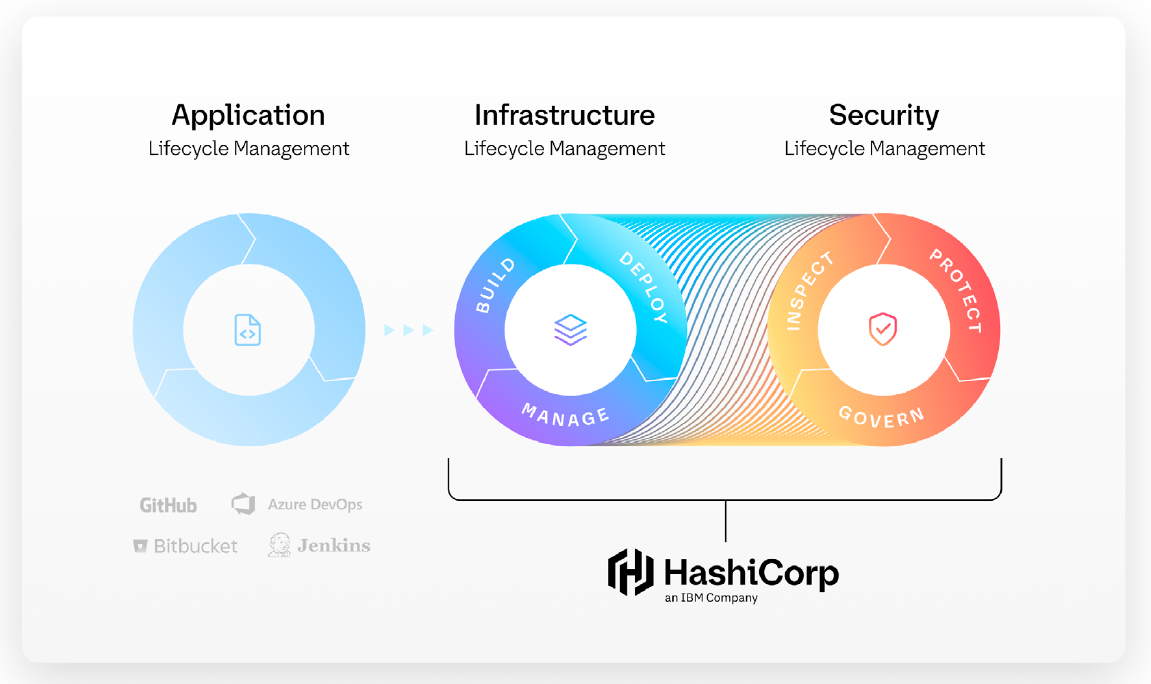
This is how HashiCorp helps platform teams do cloud right, equipping them to standardize the application value chain and deliver speed, security, and scalability at enterprise scale.
Benefits of unification:
However, a platform is only as effective as the team that runs it. This is why the role of the platform team has become more strategic and transformative.
☑️Platform Management: From Reactive Operations to Platform-as-a-Product
As we will explore in more detail in this section, achieving success in the application value chain requires organizations to consider the entire lifecycle of the platform, and this begins with the shift from a reactive operations team to a platform-as-a-product team. Before diving deeper into this shift, let's introduce the following.
Five Characteristics of a Platform-as-a-Product Mindset
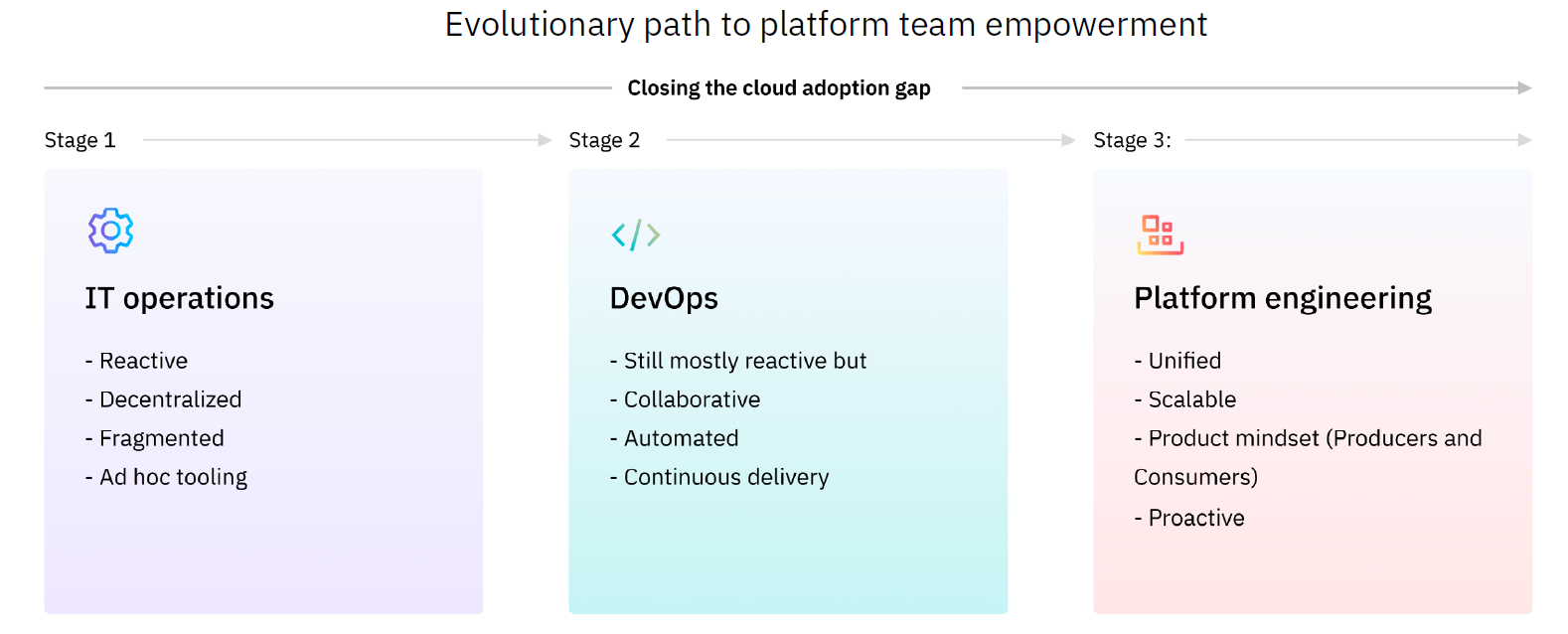
"If no one uses it, it doesn't matter how powerful it is."
As for the shift itself, as described in the previous section, organizations must evolve from a reactive, siloed approach to a more proactive, standardized, and unified one in order to succeed in cloud adoption and thrive in the era of hybrid and multi-cloud architectures. Above all, this emphasizes the use of a shared services model to organize and deliver technology services, resources, or capabilities to other parts of the organization. This approach allows different teams or business units within the organization to leverage the same set of services, reducing duplication and promoting consistency.
There are two roles in this model: Producers and Consumers. Producers ensure that shared services are easily accessible and efficiently used by Consumers, empowering them to effectively leverage the benefits of the platform. This is typically the platform team.
Consumers play an important role in leveraging shared services to meet their specific requirements and needs while adhering to the guidelines and standards set by Producers. Consumers are all teams within the organization that use the shared services provided by the platform team (Producers). They are typically application development (AppDev) teams but can also extend to SecOps and other operations teams.
A centralized platform team is responsible for building and maintaining core infrastructure and services as standardized shared resources that users across the organization can easily use.
In addition to providing these standardized resources, platform teams:
Define and implement best practices:
Facilitate cross-functional integration:
Provide centralized monitoring and reporting:
In essence, platform teams streamline access to essential resources, promote consistent practices, and ensure alignment with organizational policies for all Consumers, ultimately increasing organizational efficiency and reducing risk.
| Example of a Platform-Managed Service Workflow
Managing Network Connectivity with a Common Control Plane
Organizations need robust solutions to manage secure network connectivity between services across diverse environments, including on-premises and multi-cloud deployments. These solutions often include service discovery, service mesh capabilities, traffic management, and automated network infrastructure updates. Implementing these capabilities within a cohesive framework typically requires collaboration among various teams, each with distinct responsibilities. The following is a list of coordination efforts that may be required:
Platform setup and maintenance
Service registration and use
| Patterns and Best Practices
Let's explore common patterns in platform management and the best practices organizations can and should implement to succeed on their hybrid cloud journey.
Patterns for Platform Engineering Teams
Platform management, shown in the diagram below, is a strategy that combines infrastructure and security management into a unified platform with a common control plane. Run by a dedicated platform team, this platform provides DevSecOps teams with the services they need to deploy cloud services.
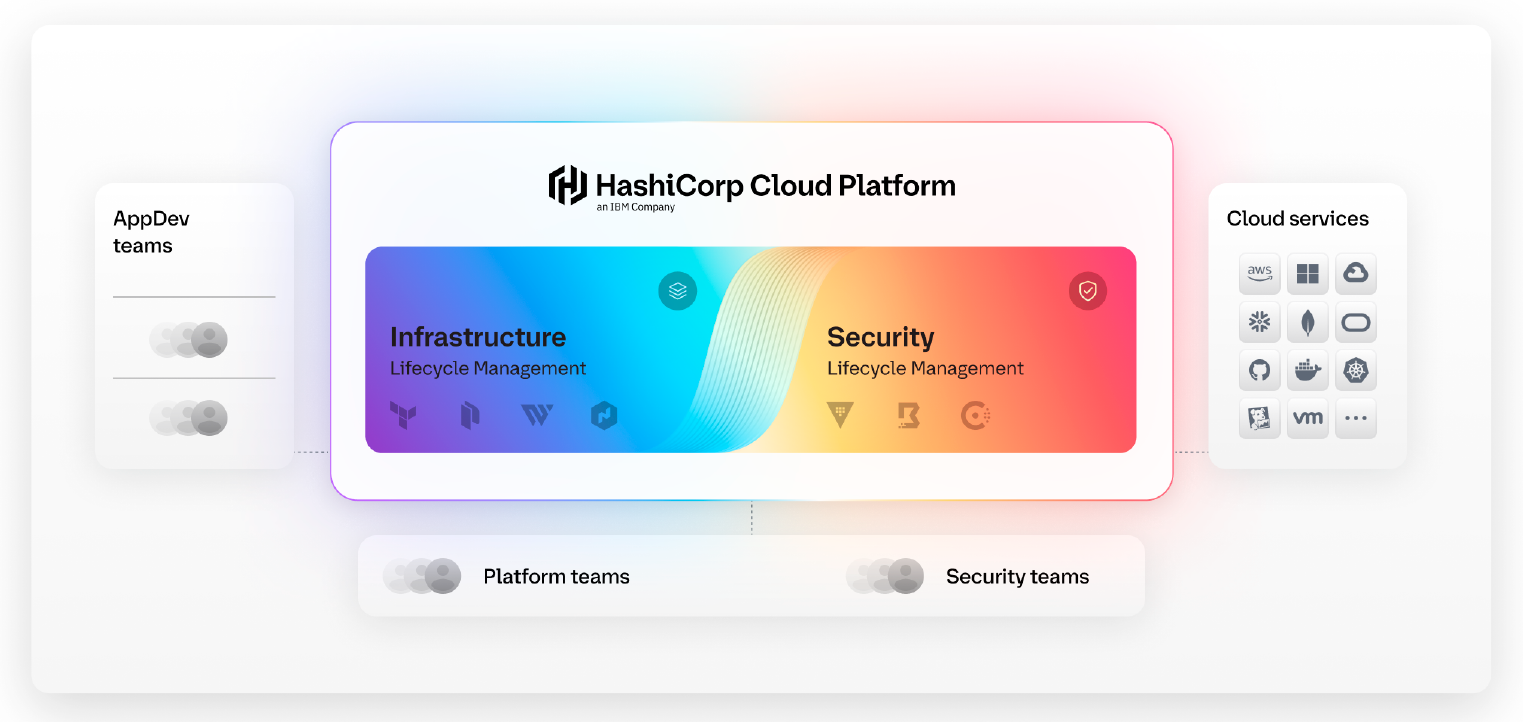
Key elements of this approach:
In essence, platform management aims to empower development and operations teams by streamlining cloud operations and strengthening security through automation and a unified platform.
Proactive Workflows Based on Best Practices
For successful implementation, platform teams should follow these best practices.
Foundational practices
Operational excellence
Adoption and support
Following the best practices in this white paper allows you to move from reactive workflows to more proactive ones. Below, we look at examples of common interactions across the organization. The actions may generally be similar, but the key difference is where they start: proactively or reactively.
| Reactive workflow | Proactive workflow (Best practices-based) |
SecOps monitors threats : SecOps identifies threat vectors and reports them to the security team. Security creates policies : Policies are created in response. With IaC, enforcement is continuous; otherwise, policies are communicated manually. Development teams implement policies : Policies are codified and rolled out to the developer portal or infrastructure tools. AppDev teams deliver apps : Teams integrate new policies on a one-off basis while still managing compliance and security issues. Additional interactions : Workflows can extend to secrets management, auditing, secure access, and more, often proceeding as isolated tasks. | Architecture establishes patterns : Architecture defines proactive patterns for efficient software delivery. Security creates policies : Security reviews and applies policies to recommended architecture patterns. Platform engineering implements policies : Policies are codified and integrated into the IDP or infrastructure tools. AppDev teams deliver apps : Teams focus on delivering business value with security built into the platform. Platform teams evolve best practices : Patterns are continuously improved to address new threats and drive innovation. |
| Example of a Proactive Platform Engineering Workflow
HashiCorp enables platform teams to provide agile application delivery mechanisms and automate across the entire hybrid estate, allowing them to get to market faster and more efficiently than competitors.
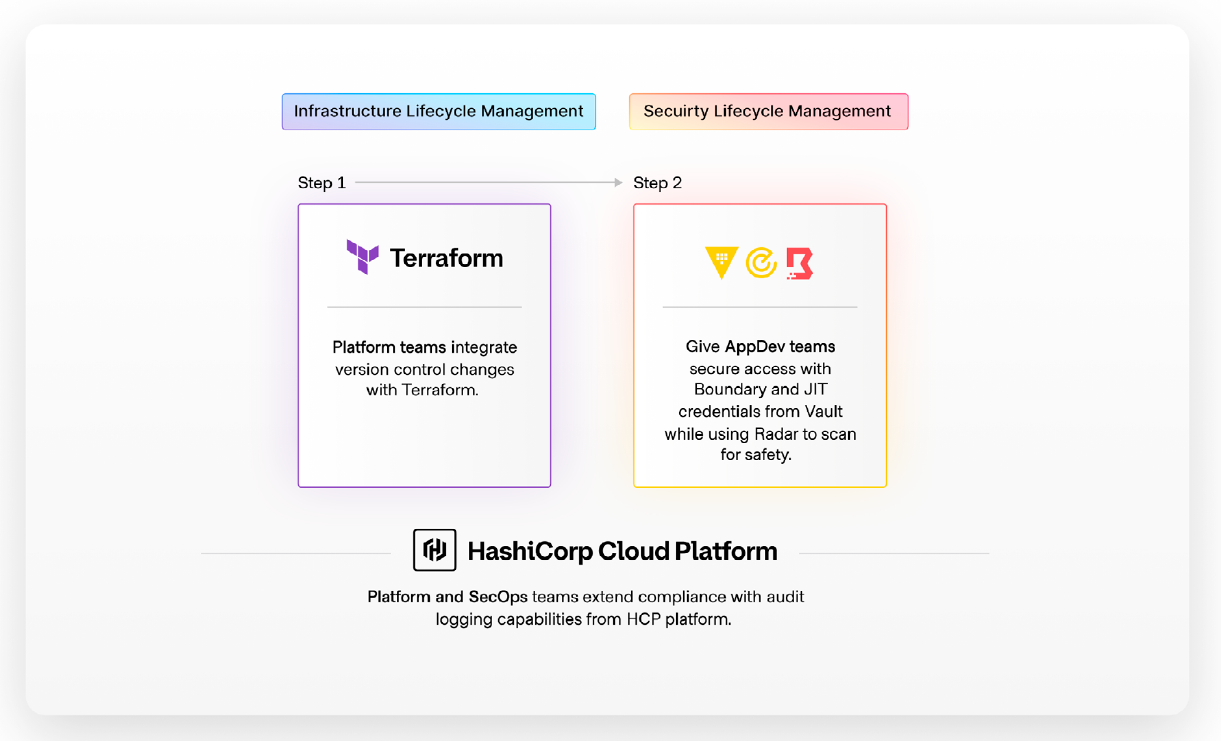
The image at the end of this page illustrates how HashiCorp's cloud platform unifies DevSecOps and platform teams with automated security and workflow governance, helping teams work at high velocity to deliver applications quickly. To see some of these key elements, let's look at AcmeCorp and its transformation story.
AcmeCorp is growing fast, but its application delivery pipeline is slowing it down. Developers wait for infrastructure. Security chases secrets in code. Operations is buried in tickets. Everyone is frustrated. Then they make the shift. They empower their platform team with HashiCorp's Infrastructure Cloud. Suddenly, things start to change.
After the shift: How AcmeCorp changed:
Infrastructure provisioning is automated
Standardized registry across environments
Guardrails are built in
One-click access to everything
CI/CD pipelines are fully integrated
☑️Platform Management with HashiCorp Cloud Platform (HCP)
HashiCorp provides a comprehensive unified platform and common control plane for ILM and SLM, promoting consistent workflows across diverse runtime environments. This standardized, automated approach provides a central system of record for cloud operations.
The Infrastructure Cloud unifies infrastructure and security management across hybrid, multi-cloud, and on-premises environments. By providing a single system of record, it centralizes workflows, governance, and automation, aligning teams through a shared platform. Organizations can access the Infrastructure Cloud through HashiCorp's on-premises commercial software and through SaaS solutions via HCP.
| Key Characteristics: Platform Management Through a Common Control Plane
These are the key characteristics of a unified platform, but they should also be treated as a readiness checklist of what every platform team should aim to support in its platform in terms of capabilities and functionality.
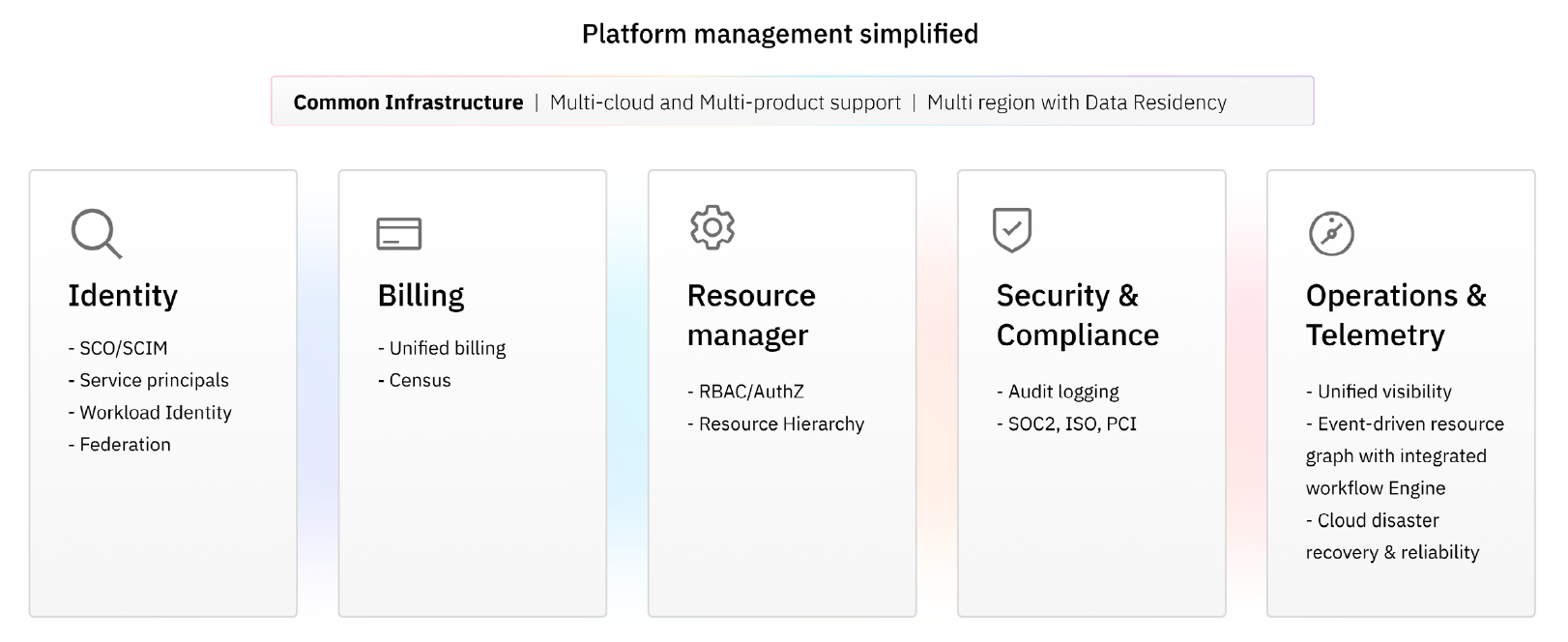
Standardized operations and telemetry: Implement standardized operating procedures and telemetry data collection across all cloud resources to ensure consistency and facilitate effective monitoring and management.
Unified visibility through an event-driven resource graph with an integrated workflow engine: Leverage an event-driven resource graph to build a centralized, dynamic view of all cloud resources, complemented by an integrated workflow engine to streamline operational tasks and provide comprehensive insights.
Robust cloud disaster recovery and reliability: Ensure business continuity and minimize downtime by implementing a comprehensive cloud disaster recovery strategy and building highly reliable infrastructure.
Comprehensive identity management (RBAC/AuthZ, resource hierarchy): Implement a robust identity management system that includes role-based access control (RBAC), authorization mechanisms (AuthZ), and a well-defined resource hierarchy to enforce security policies and control access to cloud resources.
Comprehensive audit logging: Maintain detailed and comprehensive audit logs of all activities and changes within the cloud environment to support security investigations, compliance requirements, and operational transparency.
Adherence to industry compliance standards (PCI, SOC2, ISO, etc.): Comply with relevant industry compliance standards, including but not limited to PCI DSS, SOC 2, and ISO 27001, to meet regulatory obligations and maintain customer trust.
Unified billing for all platform services: Implement a unified billing system that leverages census data and other appropriate mechanisms to provide an integrated, transparent view of costs for all services used on the platform.
Efficient resource management through SCO/SCIM: Use the System for Cross-domain Identity Management (SCIM) and potentially other service catalog operations (SCO) to facilitate efficient provisioning, deprovisioning, and management of resources and identities across the cloud environment.
Leveraging service principals for security automation: Use service principals to enable secure, automated interactions between applications and services, minimizing the need for human intervention and strengthening security.
Implementing workload identity federation: Implement workload identity federation to provide a secure, scalable approach that allows applications running in the cloud to access other cloud resources without the need for long-lived credentials.
Common infrastructure support across multi-cloud and multi-product environments: Build a common underlying infrastructure that provides consistent support for various cloud platforms and a wide range of products and services, promoting interoperability and reducing complexity.
Multi-region deployment with defined data residency: Implement a multi-region deployment strategy with clearly defined data residency policies to meet regulatory requirements, improve application performance, and enhance resilience.
| The Common Control Plane Provided by HCP
Finally, as a summary bringing together all of the preceding details, here are some key points about the value proposition in terms of an organization's business requirements and pain points for doing cloud right.
| Cloud Success Starts with the Right Team
Cloud success comes not from having more tools but from having the right strategy.
Platform teams are at the center of this strategy. By unifying the infrastructure and security lifecycles, standardizing workflows, and enabling self-service with guardrails, they transform organizations from reactive to resilient.
"The best platforms don't just deliver tools; they deliver trust."
With IBM's Infrastructure Cloud, platform teams are equipped with the proven blueprint and tools to deliver this. They empower speed, reduce risk, and drive cost efficiency at scale.
| Start Your Platform Transformation Today
Building a high-performing platform team doesn't happen overnight. But every great transformation starts with a few focused steps. Here is how to get started.
A blueprint for doing cloud right
▶ Download the Original White Paper
▶ Learn More About HashiCorp Solutions
Cloud success starts with the right strategy and the right team. As an official HashiCorp partner, CloudNetworks helps Korean enterprises build platform teams and achieve ILM and SLM integration across the application value chain. Standardized workflows, a unified platform, and a Platform-as-a-Product mindset can all be implemented with HashiCorp Infrastructure Cloud. Shift from reactive operations to proactive platform management, giving developers self-service and giving the organization control and visibility.