

Today, enterprise security teams must decide where to begin amid a constant flood of vulnerability information. Scanning tools have multiplied, but a paradox keeps repeating itself: the more results there are, the slower the actual response becomes. According to the Qualys Threat Research Unit (TRU), about 40% of enterprise assets are unknown to security teams, and while it takes attackers an average of only 19.5 days to weaponize a vulnerability, it takes organizations an average of 30.6 days to begin patching. In the meantime, attackers have an average window of 11.1 days to break in.
Qualys VMDR (Vulnerability Management, Detection & Response) is a risk-based vulnerability management solution designed to close this gap. It unifies vulnerability management, detection, and response on a single platform, with the core goal of measuring, communicating, and eliminating risk based on real-time threat intelligence. This article takes a detailed look at what Qualys VMDR is, how it works, and how it differs from traditional vulnerability management approaches.
Limitations of Traditional Vulnerability Management
Traditional vulnerability management (VM) solutions are sufficient for providing scan results but struggle to do much more. Security teams operate vulnerability management tools, patch management tools, ITSM tools, and asset management tools separately and must manually piece together information across them. Qualys describes this situation as "swivel-chair management," an inefficient approach of gathering information by switching back and forth between each tool's monitor.
According to research by ESG (Enterprise Strategy Group), organizations that cited a lack of asset visibility as a primary cause experienced a 300% increase in security incidents, and only 9% of all organizations are confident that they monitor 100% of their attack surface.
In addition, when vulnerabilities are prioritized using CVSS and EPSS alone, 692 million vulnerabilities worldwide are misprioritized. Less than 1% of all vulnerabilities are actually weaponized, but their impact is disproportionately large, so determining which vulnerabilities to address first is critical. Scores alone cannot make this judgment properly.
What Is Qualys VMDR?
Qualys VMDR is an integrated solution that performs vulnerability Management, Detection, and Response within a single platform. It runs on the Qualys Enterprise TruRisk™ Platform and provides a consistent environment for both IT and security teams with one platform, one universal agent, and one data model.
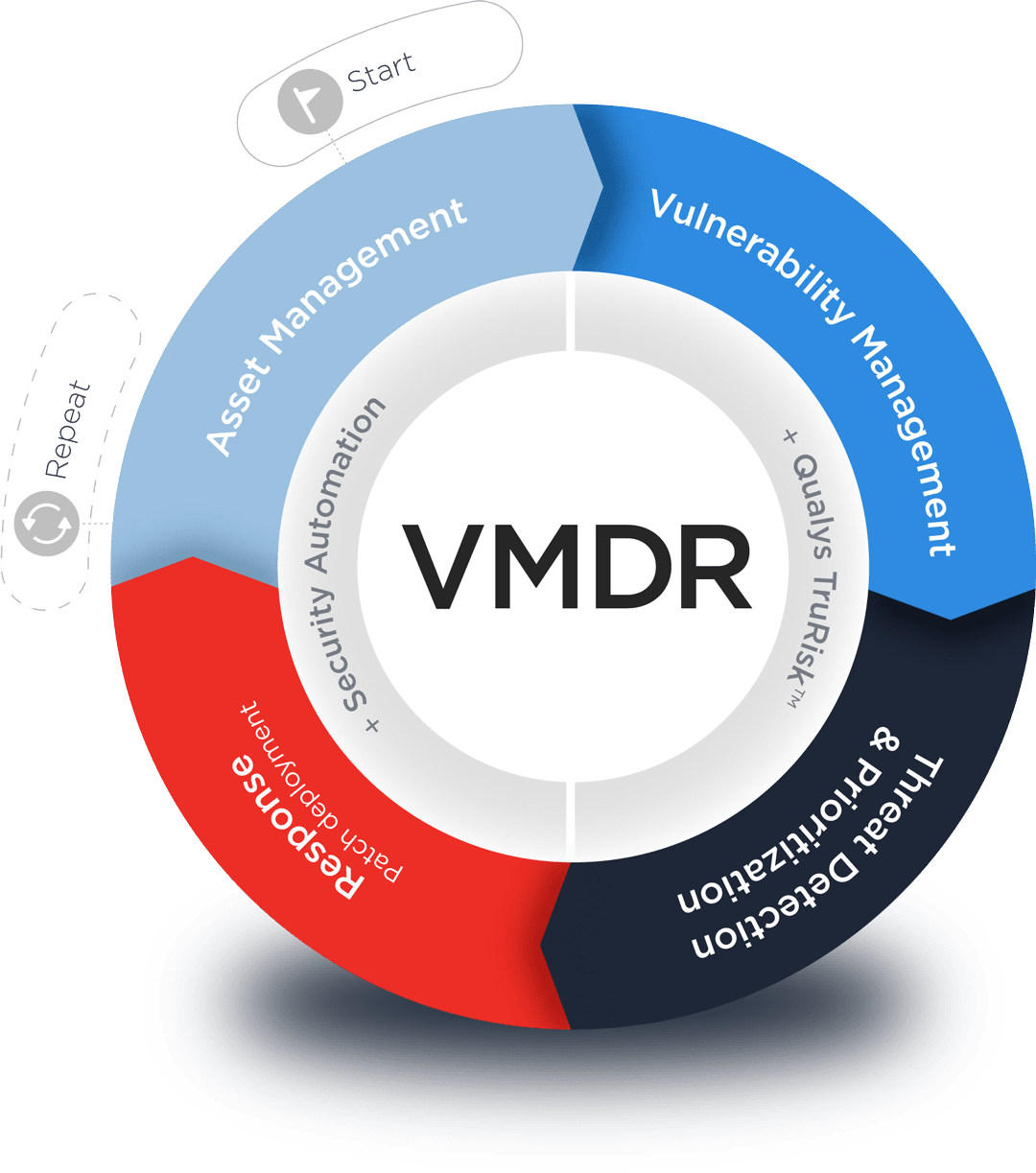
The core philosophy of VMDR can be summarized in three points.
These three principles are implemented through four core capability areas of VMDR: asset visibility across the entire attack surface, automated vulnerability and configuration assessment, risk prioritization based on TruRisk™ and MITRE ATT&CK®, and automated response through patch deployment and ITSM integration. The following sections look at each area in detail.
Understanding the Entire Attack Surface: Including Unknown Assets
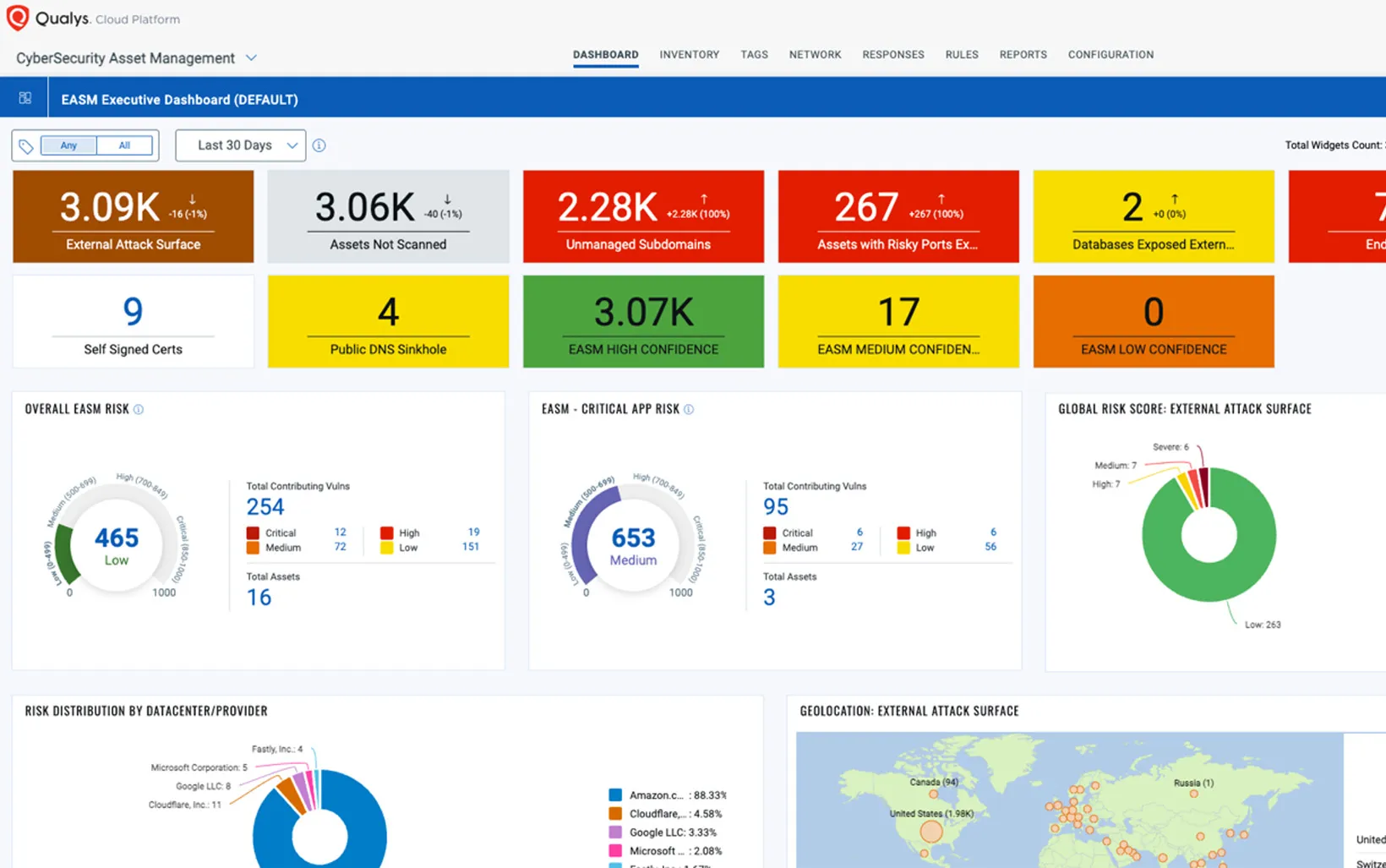
Security only works for assets that are known. However, according to Qualys TRU, assets unrecognized by enterprise VM programs account for more than 30% of the total. Forrester Research states that when attack surface management tools are adopted, IT teams discover on average more than 30% additional assets they were not aware of. Using Qualys VMDR together with CSAM (CyberSecurity Asset Management) makes it possible to discover an average of 38% more unknown internet-facing assets.
In addition, when Qualys TRU scanned more than 50 million cloud assets, 50.84% of externally exposed cloud assets were unpatched. This means assets that are not even known are exposed to the internet without being patched.
VMDR automatically discovers and scans the entire attack surface, including on-premises, cloud, internet-facing assets, IoT, OT, mobile, and containers. It also identifies assets brought in through mergers, acquisitions, and subsidiaries, allowing the entire enterprise attack surface to be managed in a single view. Cloud agents can be switched to passive sensors to identify unmanaged devices and IoT devices connected to the network in real time, and with a single click, unknown assets can be immediately added to VM, web app scanning, and patching tasks.
Detecting Missed CVEs First
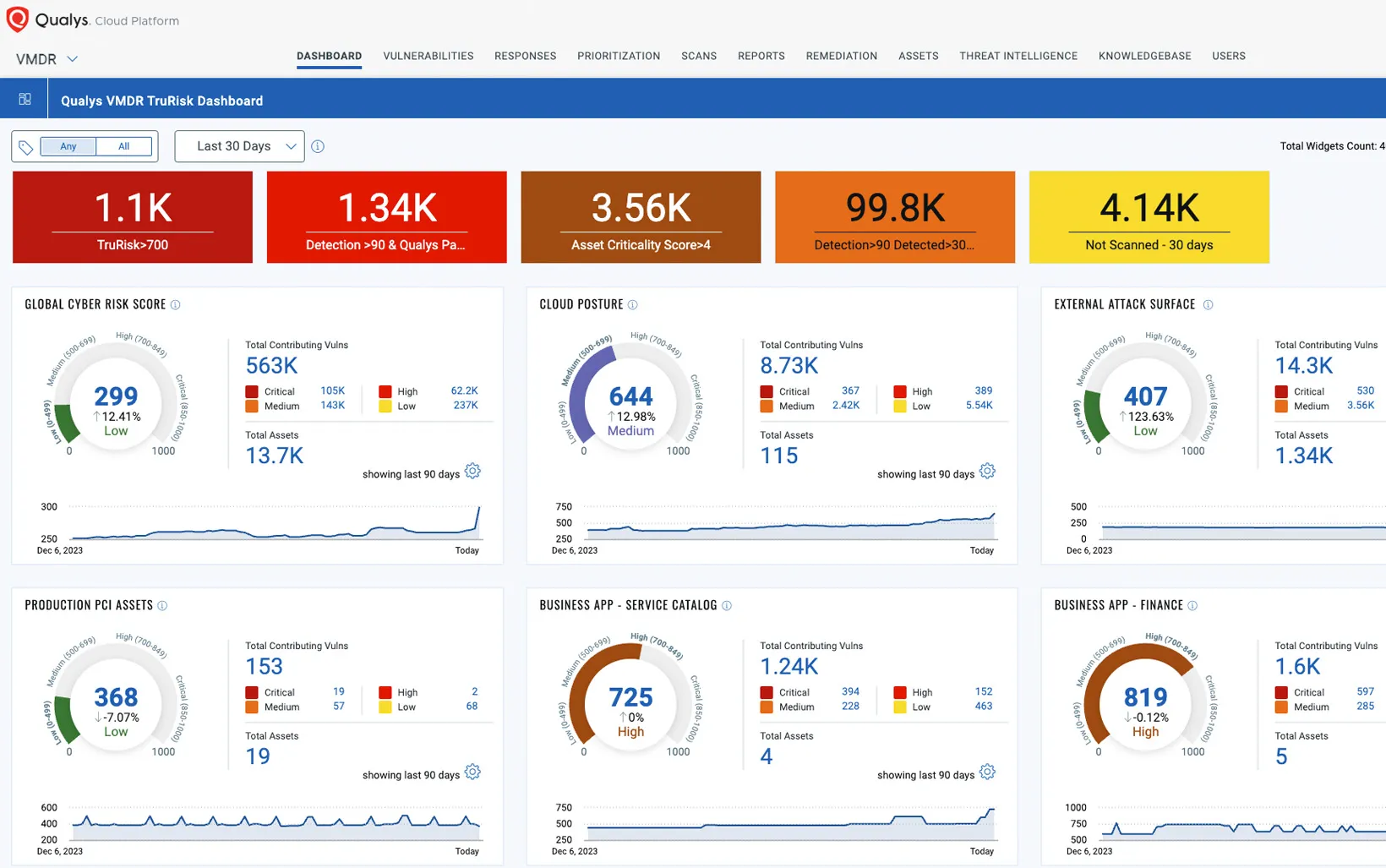
VMDR reduces the time to detect zero-day and critical vulnerabilities by 24% compared to competing solutions, and its overall vulnerability detection speed is up to six times faster than competing solutions. Through the Threat Detection Feed, it immediately identifies newly emerging high-risk vulnerabilities and quickly queries the assets affected by them.
Vulnerability and compliance reporting is automated, and vulnerabilities in hardware, software, and firmware are covered across all application areas. Because 70% of vulnerabilities can be exploited without special privileges, fast detection and accurate coverage are fundamental prerequisites for risk management. Detected vulnerabilities are automatically linked to missing patches, leading directly into immediate response procedures.
TruRisk™: A Risk Score Beyond CVSS and EPSS
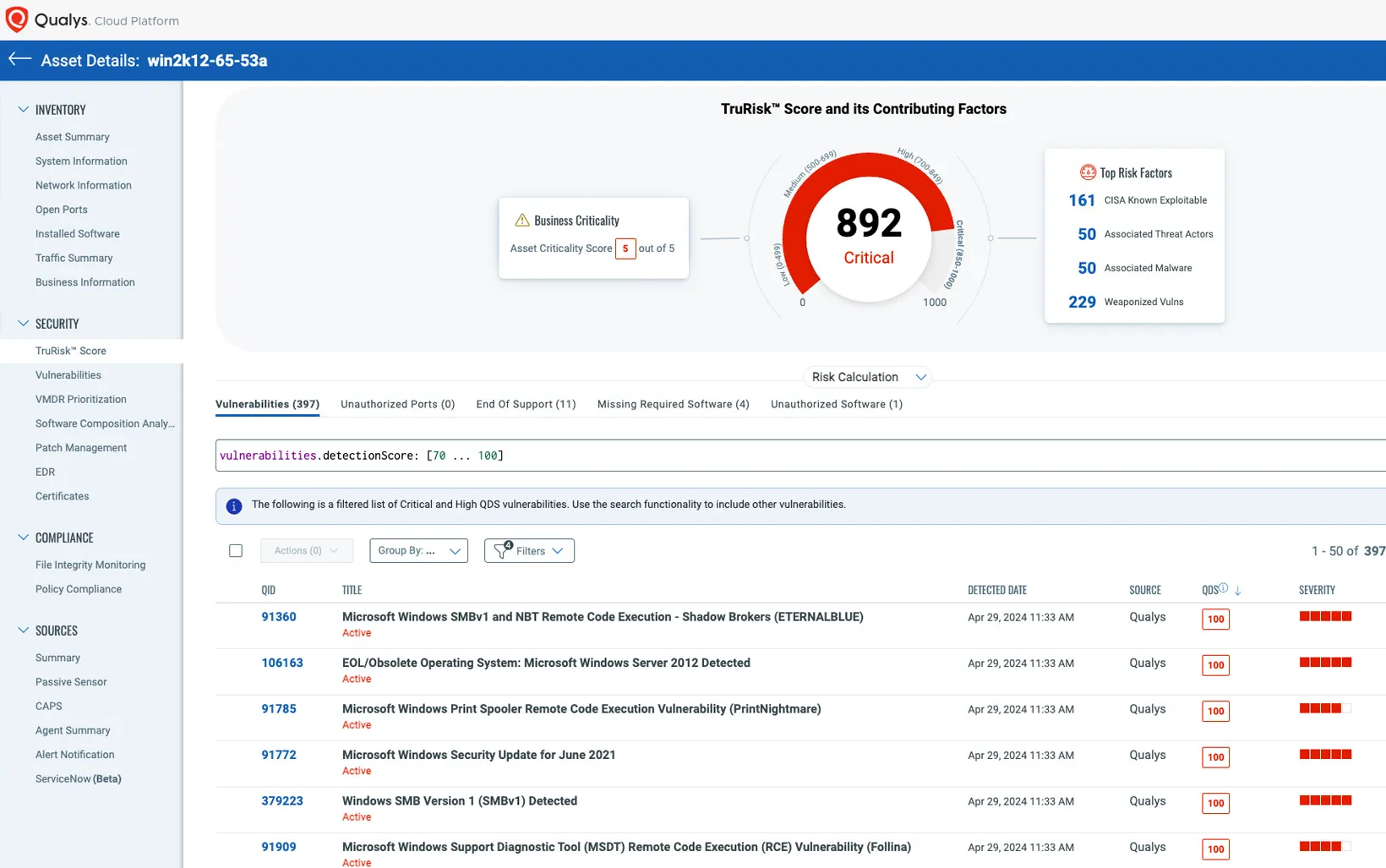
CVSS describes the severity of a vulnerability, but it does not reflect whether the vulnerability is actually being used by attackers right now or how it affects your organization's critical assets. VMDR overcomes this limitation through TruRisk™.
TruRisk™ integrates more than 25 real-time threat intelligence sources to calculate the actual risk of each vulnerability. This reflects whether the vulnerability is actually being exploited, asset criticality, EoL/EoS (end-of-life/end-of-support) status, expired certificates, the risk of open ports, and whether the CVE has actually been exploited by ransomware. The resulting QDS (Qualys Detection Score) is also linked to the MITRE ATT&CK® framework, enabling precise prioritization that reflects both threat context and business context.
TruRisk™ uses machine learning (ML) to automatically identify potentially critical vulnerabilities and highlight indicators of compromise (IoCs). It also calculates priorities by comprehensively correlating not only vulnerabilities but also misconfigurations, asset hygiene, more than 25 threat feeds, and asset criticality. This helps reduce critical vulnerabilities by up to 85%.
How to Communicate Risk Effectively
Communicating the risks identified by the security team to executives and other departments is a separate challenge. VMDR automatically routes vulnerabilities to the responsible owners and provides customized dashboards and reports by team, business unit, and region. The CMDB (Configuration Management Database) is continuously updated, and ITSM tickets are automatically assigned with 96% accuracy through Qualys tag-based mapping. This creates a structure in which vulnerabilities discovered by the security team are seamlessly connected to the responsible owners on the IT team.
Through a variety of third-party connectors, including ServiceNow, BMC Helix, Active Directory, and Webhook, business context such as asset criticality, device owners, and support groups can be added to the security program. Collaboration between security and IT teams can be run within a single platform without spreadsheets.
From Detection to Patching: Automated Response Within the Platform
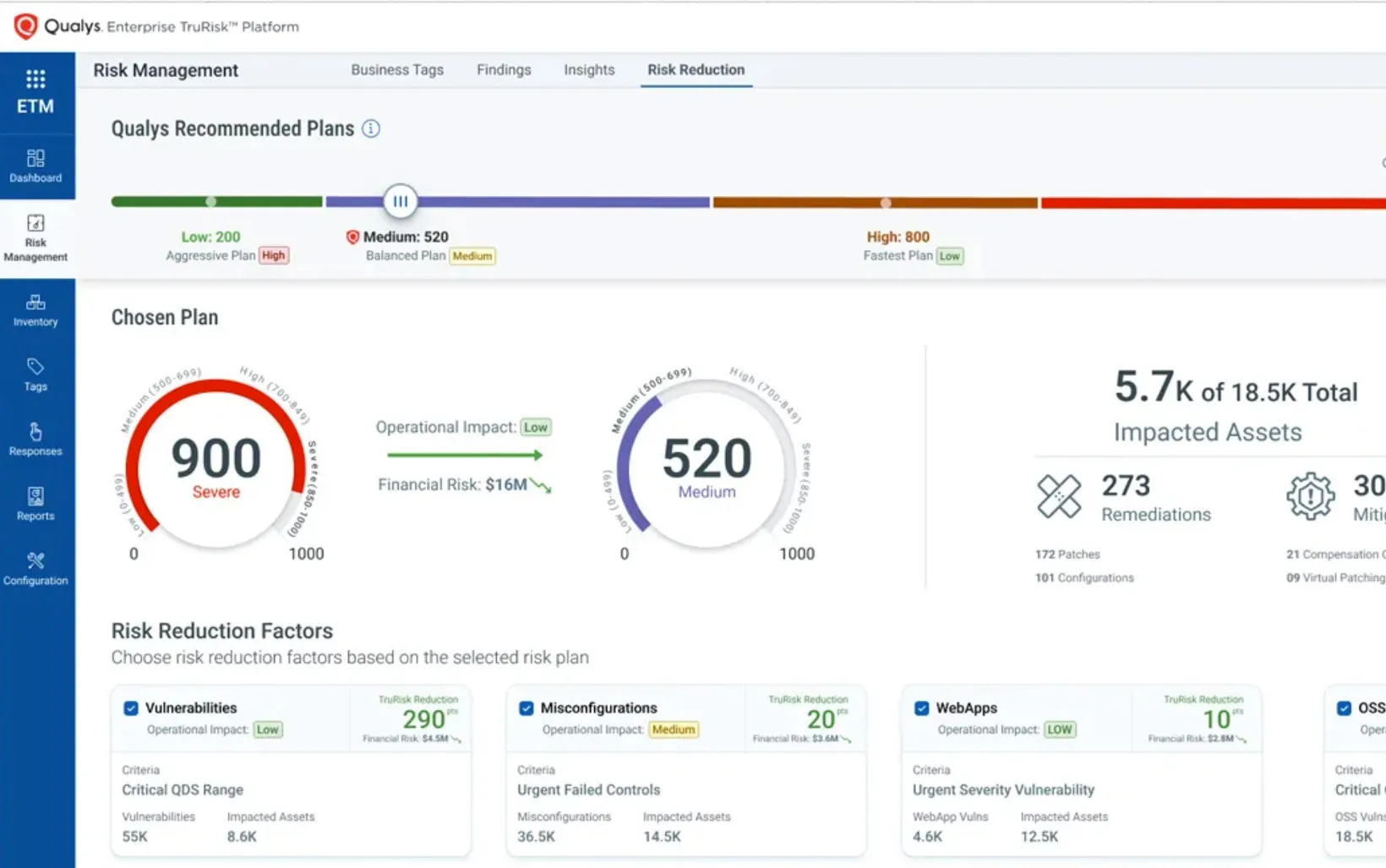
VMDR also handles the response after vulnerability detection within a single platform. Patches can be deployed directly to any device regardless of location, and multiple response options are provided, including patch deployment, mitigation, and attack path blocking.
Through native integration with ServiceNow and Jira, ITSM tickets are automatically created for detected vulnerabilities and routed to the responsible owners. With QFlow (a rule-based automation capability), the entire process from vulnerability detection to ticket creation and patch deployment can be automated according to rules and operated to meet target SLAs. This structure reduces MTTR by up to 60% and unifies the workflows of IT and security teams in a single flow.
Technical debt management is also possible. EoL/EoS software can be tracked up to 12 months in advance and managed in line with CISA guidelines. It helps CISOs and CIOs proactively plan the budget and resources needed for updates or mitigations, and EoL/EoS items can be broken down by category, publisher, and product to accurately identify risk priorities.
What a Single VMDR License Covers: Capabilities Included in the License
In addition to vulnerability detection and patch response, VMDR includes a variety of capabilities that support overall security operations within a single license. Not having to add separate tools is one of VMDR's real operational strengths.
Runtime Software Composition Analysis (Runtime SCA) identifies vulnerabilities in open-source and third-party components used within running applications. Because it can detect risks down to the library level included in code, software supply chain security management can also be carried out within VMDR.
Certificate inventory, assessment, and renewal capabilities continuously track the status of SSL/TLS certificates within the organization and identify expired certificates as risk factors. Expired certificates are also reflected as a risk factor in TruRisk™ calculations, so certificate management operates in conjunction with vulnerability management.
Cloud, container, and mobile inventory allows cloud instances, containers, and mobile devices, in addition to on-premises assets, to be managed in a single unified inventory. Unlimited virtual scanners, cloud agents, passive sensors, agent gateways, and container sensors cover all assets regardless of infrastructure scale.
PCI ASV assessment supports evaluating compliance with PCI regulations, including PCI DSS 4.0, directly within the platform. CIS benchmark assessment automatically checks the security suitability of system configurations according to CIS (Center for Internet Security) standards. These two compliance capabilities are handled within VMDR without separate tools and are also linked to building asset inventories aligned with major security standards such as CISA, FedRAMP, NIST, and SOC 2.
QFlow is a rule-based automation capability that automatically handles repetitive workflows after vulnerability detection, such as ticket creation, patch deployment, and owner assignment, according to rules. ServiceNow and Jira integrations are provided by default, and it also connects with a variety of third-party tools, including BMC Helix, Active Directory, and Webhook.
Reporting the Risk Picture to Executives
VMDR functions not only as a tool for security practitioners but also as a communication tool for executives. Based on TruRisk™, it quantifies risk by vulnerability, asset, and business unit and presents it in a form executives can understand. It tracks risk reduction trends over time and allows teams to report in numbers which areas of the organization have reduced risk.
This allows security teams to report on the situation in business language rather than technical terms, and CISOs can generate the supporting evidence they need to communicate with the board and executives directly within the platform.
Enterprise TruRisk™ Platform: The Foundation on Which VMDR Runs
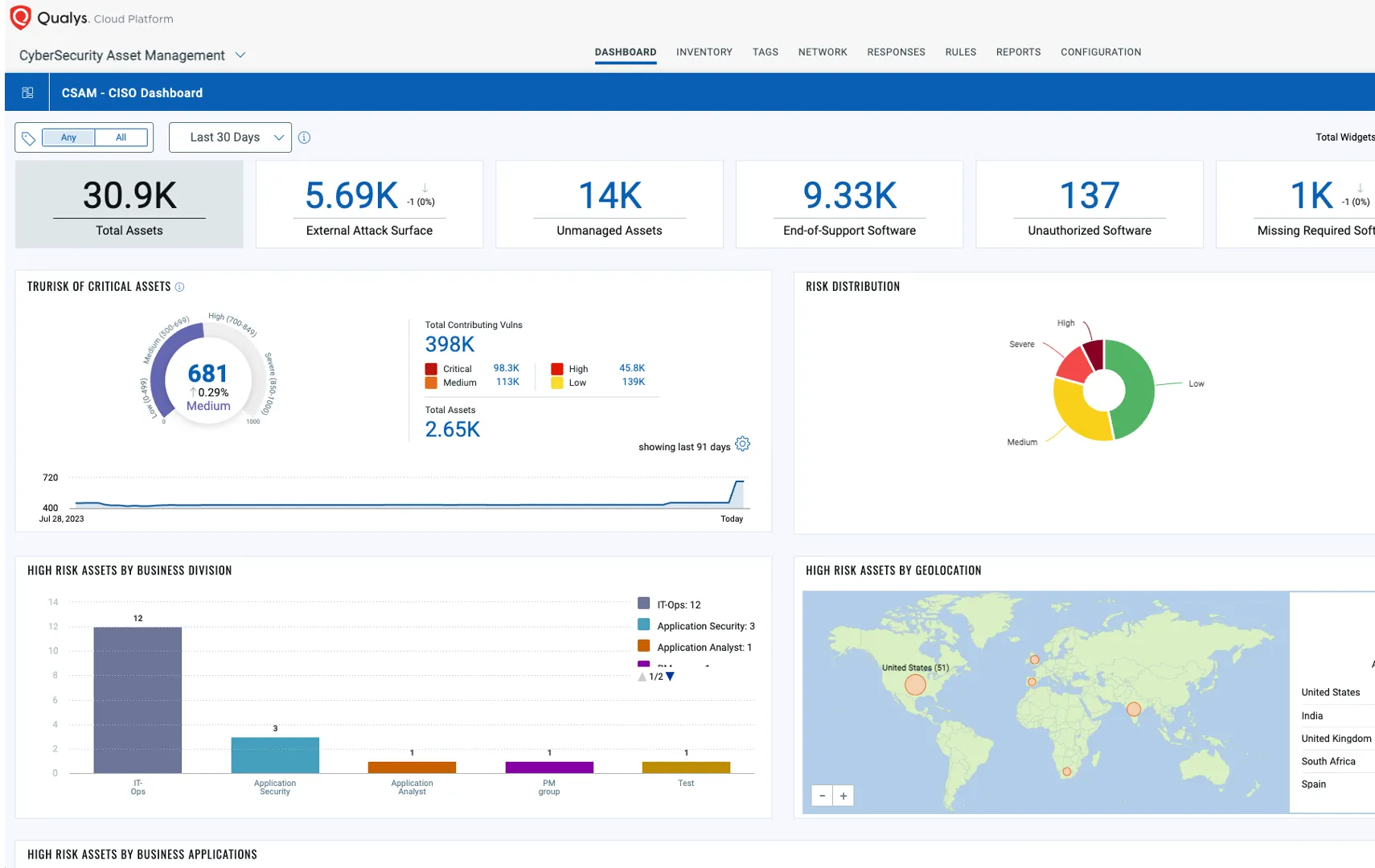
VMDR runs on the Qualys Enterprise TruRisk™ Platform. This platform aggregates and measures risk factors not only from Qualys solutions but also from third-party solutions in a single unified view. It provides a single view of the cyber risk posture across security operations and an environment in which organizations can efficiently aggregate, measure, communicate, and eliminate the risks they actually face. Currently, more than 10,000 companies worldwide subscribe to the Qualys platform, and most Forbes Global 100 and Fortune 100 companies use it.
For inquiries about Qualys VMDR and the Enterprise TruRisk Platform, please contact CloudNetworks, an official partner.